How to Get More Out of Your Perth Warehouse: A Practical Guide to Maximising Storage Space
Contributors

Breaking News


Industrial space in Perth is not getting any cheaper. Across Kewdale, Welshpool, Canning Vale, Bibra Lake, and the growing northern corridor through Malaga and Wangara, warehouse rents and land values have climbed steadily, and the lots that do come up are leased quickly. For most operators, relocating to a bigger facility is the expensive option of last resort. The smarter move is to make the building you already have work harder.
The encouraging part is that most warehouses are sitting on a surprising amount of unused capacity. It is rarely on the floor, where everyone can see it. It is in the air above the racking, in aisles that are wider than they need to be, and in layouts that grew piece by piece rather than by design. This guide walks through the practical ways Perth businesses can unlock that hidden space, lift storage density, and keep their operation running safely without signing a new lease.
Look Up Before You Look Out
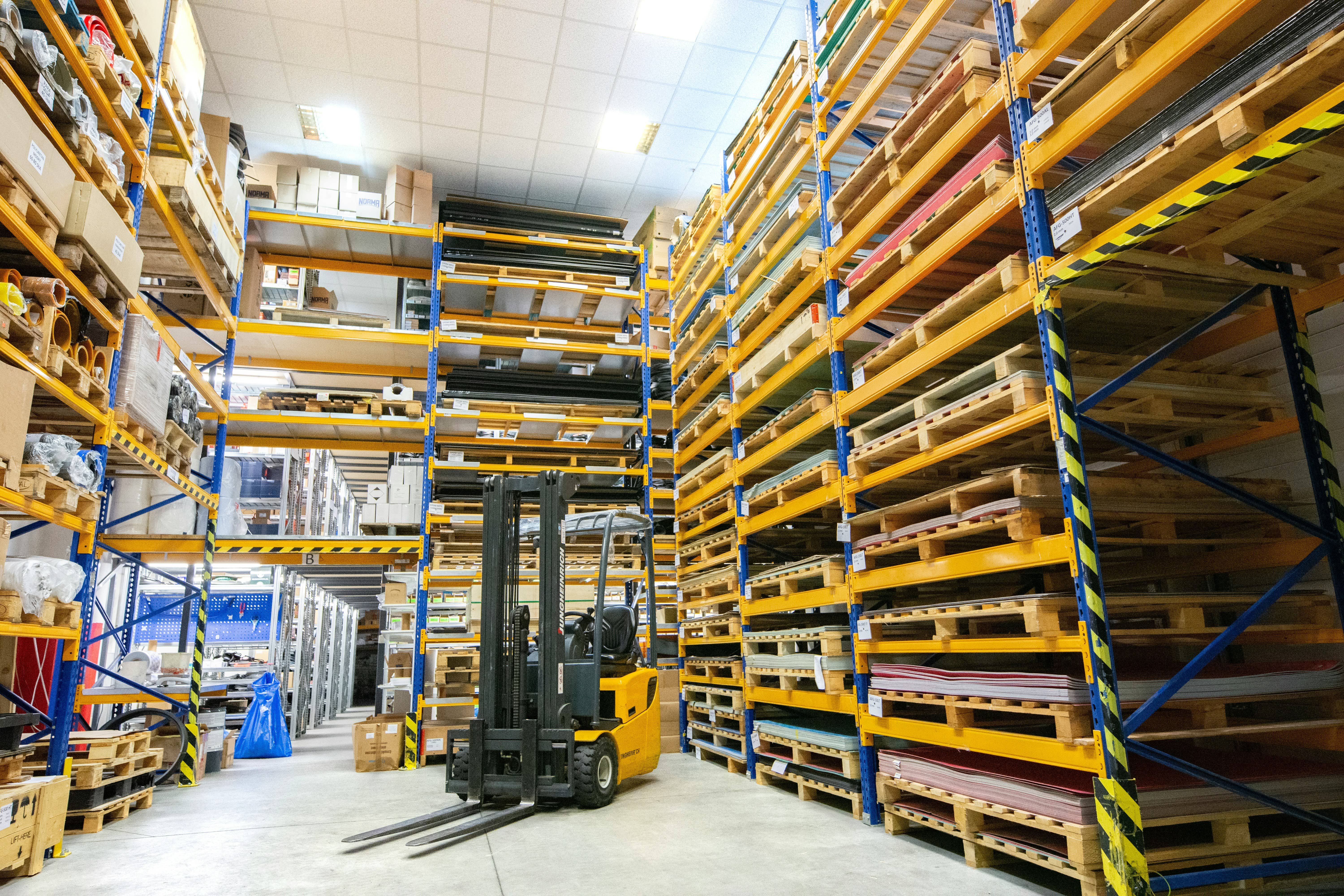
When a warehouse feels full, the instinct is to spread out or move out. Yet the cheapest square metres in any facility are the ones already inside your four walls, stacked vertically. Many Perth warehouses were fitted out years ago with racking that stops well short of the available roof height, leaving metres of clear air doing nothing.
Before anything else, measure your true clearance. Note the height to the underside of the roof structure, the position of sprinkler heads, lighting, and any services that hang down, and the load rating of your slab. Those figures determine how high you can safely build. A facility with eight or nine metres of clearance often has room for one or two additional beam levels, which can lift pallet capacity by a third or more without expanding the footprint at all.
Going taller does usually mean rethinking your handling equipment. Reaching upper levels safely may call for a reach truck rather than a counterbalance forklift, and that trade-off is worth modelling early. In most cases the cost of the right truck is a fraction of the cost of leasing additional floor space, and it pays for itself in retained capacity.
Match the Racking System to How You Store
The single biggest lever on storage density is choosing a racking system that suits your stock, rather than defaulting to the one you have always used. Selective pallet racking is the most common setup in Perth warehouses for good reason. It gives a forklift direct access to every pallet, which is ideal when you carry a wide range of SKUs that turn over regularly. The trade-off is that it dedicates a lot of floor space to aisles.
If you store large volumes of the same product, high-density systems can dramatically reduce that wasted aisle space. Drive-in racking lets forklifts enter the bay itself, eliminating aisles between lanes and suiting last-in, first-out stock such as bulk or cold-storage lines.
Push-back racking uses inclined rails so pallets can be stored several positions deep while still being loaded and retrieved from a single aisle, delivering density with better rotation. Double-deep racking stores pallets two positions deep and strikes a sensible middle ground when space is tight but you still need reasonable selectivity. For high-throughput distribution centres, shuttle racking uses a motorised shuttle to move pallets within the lanes, cutting forklift travel and squeezing more storage into the same envelope.
Few warehouses are best served by a single system. The most efficient Perth layouts often blend two or three: selective racking for fast-moving lines, drive-in or push-back for bulk SKUs, and cantilever racking for the long, awkward items such as timber, steel, and piping that never sit neatly on a standard pallet. Getting that mix right is where real density gains come from.
Reclaim the Space Your Aisles Are Stealing
Aisles are necessary, but they are often far wider than they need to be. Many warehouses run aisles sized for a counterbalance forklift that has long since been replaced, or that were simply set conservatively at fit-out. Narrowing aisles to suit your actual handling equipment can free up enough room for additional rows of racking.
Narrow-aisle and very-narrow-aisle configurations, paired with the appropriate trucks, can recover a meaningful share of floor area, sometimes enough to add whole bays. This is exactly the kind of change that benefits from a proper layout assessment, because aisle width, forklift selection, racking type, and safety clearances all interact. Get one wrong and you create bottlenecks or damage; get them working together and you can lift capacity without touching the building.
Add a Floor Without Adding a Building
When the racking is already optimised and you still need more room, a mezzanine floor is often the most cost-effective way to expand. A well-designed mezzanine effectively doubles the usable area beneath it, creating space for slow-moving stock, order picking, parts storage, or even offices, all within your existing footprint and roofline.
Mezzanines can be engineered to your slab and load requirements and installed in stages to keep disruption to normal operations to a minimum. For a Perth business weighing the cost and upheaval of relocating against the cost of building up, a mezzanine or raised storage platform frequently wins on both price and convenience. Longspan and industrial shelving on a mezzanine level is also a tidy way to handle cartons, parts, and bulky items that do not justify pallet racking.
Don't Let Compliance Become the Bottleneck
Maximising density is only worthwhile if the result is safe and certifiable. Every new racking system installed in Western Australia must comply with AS 4084:2023, the current Australian Standard for adjustable steel storage racking. The 2023 edition tightened requirements around floor fixings, upright protection, load signage, and inspections, so older or second-hand racking installed under the previous standard can quietly create compliance gaps as you reconfigure.
Two points matter most when you are pushing for higher density. First, every system must display clear rack load signs showing the maximum unit load per beam pair, and those ratings must be respected as you add levels or change pallet types. Second, annual inspections by a competent person are now mandatory, not optional. The taller and denser your storage becomes, the more important it is that beams, uprights, and protectors are checked and certified, because the consequences of a failure scale with the load above. Treating a routine inspection as cheap insurance is the right mindset.
Why Local Perth Knowledge Pays Off
Perth warehouses have their own quirks. Slab conditions vary across the older industrial pockets of Welshpool and Kewdale compared with newer estates in Jandakot or Hazelmere. Roof heights, sprinkler layouts, and council requirements differ from site to site, and the right answer for one building can be wrong for the one next door. A layout designed in the abstract rarely survives contact with a real facility.
That is why a site assessment from a team that installs pallet racking in Perth warehouses every week is worth far more than a generic catalogue recommendation. A local specialist can map your stock profile, forklift paths, picking zones, and staging areas, then design a layout that lifts density while keeping throughput and safety intact. They can also stage the work to keep your operation moving, which matters when every hour of downtime has a cost.
A Quick Checklist Before You Commit
Use this shortlist to pressure-test any plan to squeeze more out of your Perth warehouse:
- Have you measured true clearance height, including services and sprinklers, before assuming you are out of room?
- Does your racking system suit how your stock actually moves, or are you defaulting to selective racking out of habit?
- Are your aisles sized for your current forklift, or for one you no longer run?
- Would a mezzanine or raised platform add space more cheaply than relocating?
- Is every component certified to AS 4084:2023, with load signs displayed and annual inspections scheduled?
- Has a local specialist assessed the actual building rather than a floor plan?
The Bottom Line
Running out of space in Perth does not have to mean paying for more of it. Most warehouses can recover significant capacity by building upward, matching the racking system to the stock, tightening aisles, and adding a mezzanine where it makes sense, all while staying compliant with current Australian Standards. The work starts with an honest look at how your facility is really being used, ideally alongside a team that knows Perth conditions and can design around them. Do that well, and the building you already have may comfortably carry your operation for years to come.