How to Choose the Right Laboratory Incubator
Contributors

Breaking News


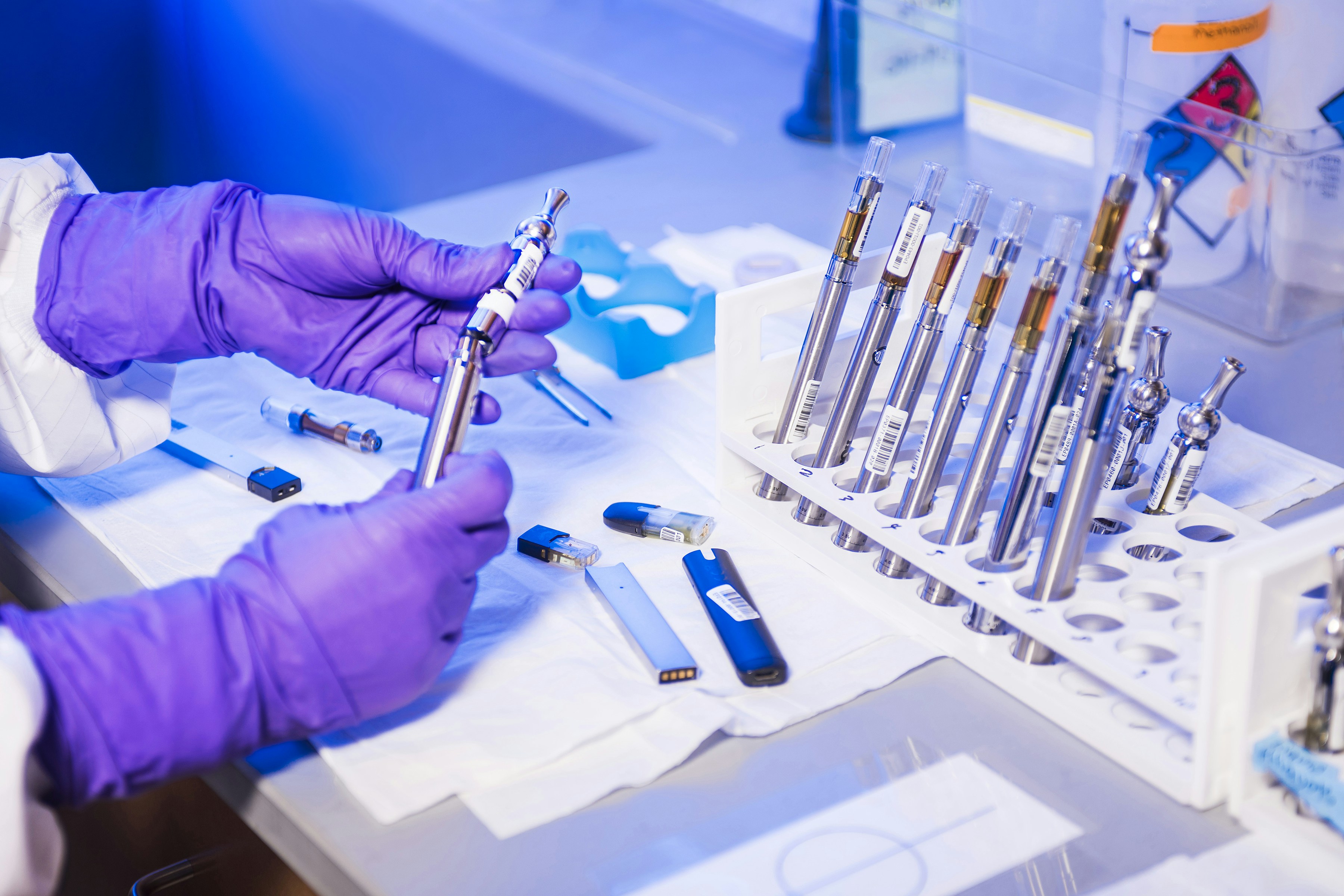
The incubator is the quiet workhorse of the laboratory. Cell cultures, microbiological plates, tissue growth and countless sample-testing protocols all depend on it to hold a stable, accurately controlled environment for hours, days or weeks at a time. But incubators are not one-size-fits-all. Convection type, temperature range, capacity and cooling capability all vary from model to model, and choosing the wrong one can cost you uniformity, recovery time or the ability to run a protocol at all. This guide walks through the key decisions so you can match an incubator to your application and buy with confidence.
Start with the application, not the spec sheet
It is tempting to compare capacities and temperature ranges first, but the smarter starting point is the work the incubator will actually do. A microbiology lab culturing plates at 37 °C has very different needs to a team running BOD tests near 20 °C, or a facility housing a shaker inside a temperature-controlled cabinet. Ask yourself three questions before anything else: what temperature range do I need, how tight does temperature uniformity have to be, and how much sample volume will I be running at once?
Applications that are sensitive to even small temperature variation, such as cell culture, enzyme work or accredited quality testing, demand better uniformity, stability and recovery than routine warming or storage. Getting clear on this early prevents you from over-spending on features you will never use, or worse, under-buying and compromising your results.
Natural convection vs fan-forced: the core decision
The single biggest choice you will make is how air moves inside the chamber. The difference shapes both uniformity and how gently your samples are treated.
Natural convection
A natural convection incubator relies on the gentle, passive rise of warm air rather than a fan. Because there is no forced airflow, samples are not disturbed and evaporation and surface drying are minimised, which suits delicate cultures, uncovered media and any work where air movement could affect results. The trade-off is slightly slower recovery after the door is opened. Thermoline's benchtop incubators are unusual in giving you both options: a simple switch at the rear lets you select natural convection or fan-forced operation, a feature unique to Thermoline. The benchtop range spans five capacities from 20 to 280 litres, operates from ambient +5 °C to +60 °C, and holds control accuracy to ±0.1 °C.
Fan-forced convection
A fan-forced incubator actively circulates air around the chamber. That constant movement delivers excellent spatial uniformity from shelf to shelf and rapid temperature recovery after the door is opened, which matters most when you are running full loads or opening the door frequently. For larger or busier workflows, Thermoline's upright premium incubators use fan-forced control in 520 and 1100-litre capacities, with solid or glass door options and an Omron PID controller for dependable, repeatable results.
When you need to go below ambient
A standard incubator can only warm above room temperature. If your application calls for temperatures below ambient, such as BOD testing, low-temperature culture work or controlled-environment storage, you need a refrigerated incubator. These cabinets add active cooling for accurate control across a wider range. Thermoline's premium refrigerated incubators come in 145, 360, 520 and 1100-litre capacities with an operating range of +5 °C to +45 °C, and include adjustable durable shelves, energy-efficient LED interior lighting, a clear digital temperature display and a high-temperature alarm. If your process instead needs to run above +60 °C, a laboratory oven is the right tool rather than an incubator.
Specialised cabinets for specific jobs
Some applications call for a purpose-built design rather than a general incubator:
- Shaker incubators. A refrigerated cabinet designed to house lab equipment such as a reciprocating shaker in a controlled environment, with the equipment powered from an independent outlet outside the chamber, ideal for temperature-controlled mixing and culture work.
- Large-capacity research cabinets. High-volume programs benefit from upright 520 to 1100-litre models that hold uniformity across a big chamber and recover quickly between door openings.
If your need is this specific, a basic benchtop unit will only frustrate you. Choosing the right cabinet first time is almost always the better investment.
Features that separate good incubators from great ones
Once you have settled on a type, a handful of features will determine how easy the incubator is to live with day to day:
- Accurate temperature control. A quality PID controller, such as an Omron unit, holds the set point tightly and recovers quickly, which matters most for sensitive protocols.
- Tight uniformity and stability. Look for strong shelf-to-shelf consistency; benchtop control to ±0.1 °C is a good benchmark for critical work.
- Monitoring and alarms. A clear digital display and a high-temperature alarm protect valuable samples and simplify daily checks.
- Capacity and configuration. Match chamber volume and shelf layout to your batch sizes and bench or floor space; castors help with larger cabinets.
- Door and lighting options. Glass doors and LED interior lighting let you inspect samples without disturbing the environment.
Think about day-to-day use before you buy
An incubator is a long-term investment, so it pays to picture how it will be used and maintained, not just how it performs on day one. Adjustable shelves, smooth interiors and accessible chambers make cleaning and reconfiguration quick, which protects your cultures and your results. Where contamination is a concern, plan for routine cleaning and consider how often the door will be opened, because frequent access favours a fan-forced design that recovers fast.
It is also worth checking how temperature is verified. Even the best controller benefits from periodic calibration against a traceable thermometer, particularly for regulated or accredited work. Choosing a cabinet with stable, repeatable control, clear monitoring and a high-temperature alarm makes that routine quick rather than painful, and gives you confidence that the number on the display is the temperature your samples actually experience.
Buy from a manufacturer who understands your lab
Specifications matter, but so does who stands behind the equipment. Thermoline has designed and built incubators in Australia since 1970, manufacturing every cabinet at its Wetherill Park facility and backing its products with a 24-month parts and labour warranty and an in-house R&D and service team. That “right first time” approach is why laboratories across healthcare, education, research and industry, including institutions such as CSIRO and major universities, rely on Thermoline equipment.
If you are weighing up your options, browse the full range of laboratory incubators to compare benchtop, upright premium and refrigerated models side by side. And if nothing off the shelf fits your exact size or function, the team can help you specify the right cabinet, so you get equipment that matches your workflow rather than the other way around.
The bottom line: define your application first, choose natural or fan-forced convection based on how sensitive your work is and how often you open the door, step up to refrigerated only if you need below-ambient control, and pick the features that make daily use easier. Get those decisions right and your incubator will quietly do its job, accurately and reliably, for years.