A Beginner's Guide to VMS Boards: The Roadside Tech Keeping Australian Sites Safe
Contributors

Breaking News
If you've driven past a set of roadworks lately, chances are a bright LED sign flashed a “PREPARE TO STOP” or “WORKERS AHEAD” message at you. That sign is doing more than just issuing instructions. It's actively shaping driver behaviour, reducing rear-end crashes, and protecting the crews working just a few metres away. It's called a VMS board, short for Variable Message Sign, and it has quietly become one of the most important pieces of safety equipment on modern Australian roads.
For anyone new to traffic management, civil construction, or event planning, understanding how VMS boards work and where they fit into a site plan is a useful bit of knowledge. This guide breaks down the basics in plain English.
What Is a VMS Board?
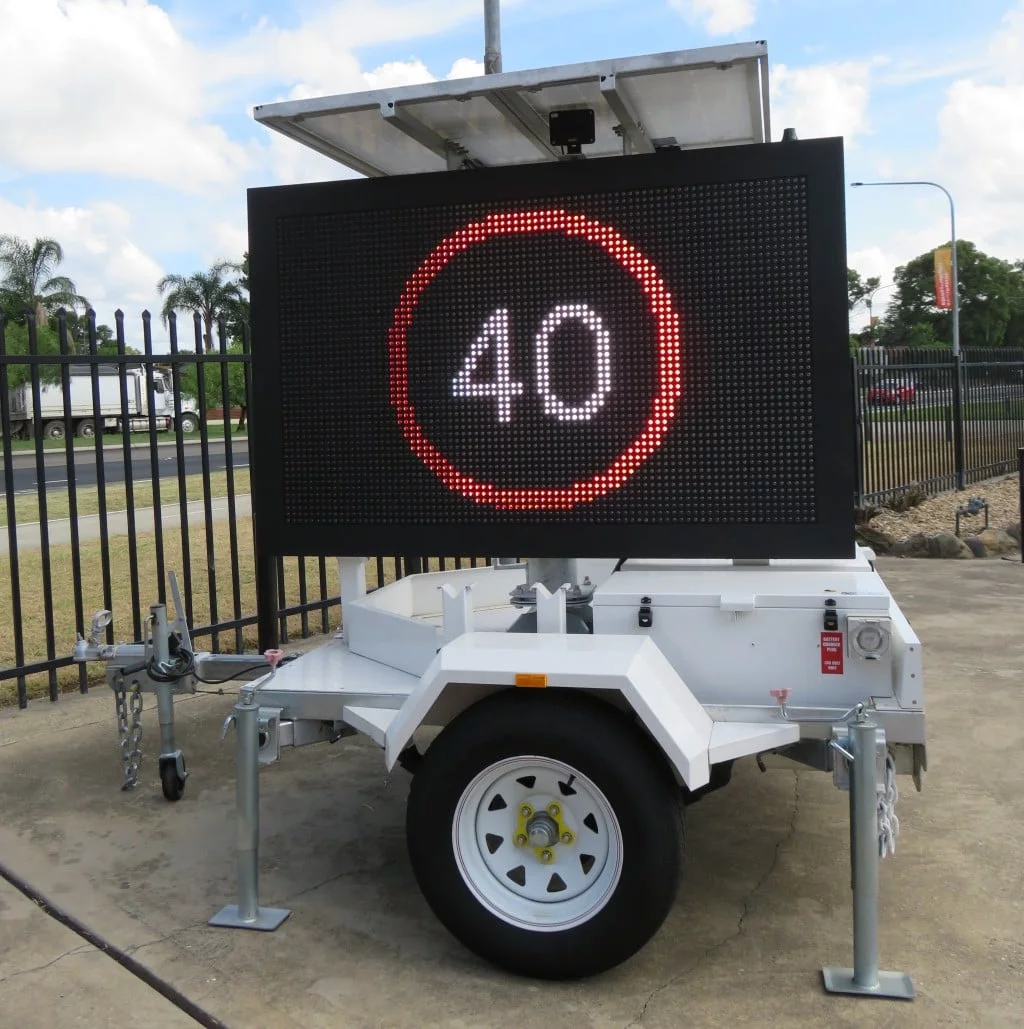
A Variable Message Sign is a programmable electronic display, typically mounted on a trailer, a truck, or in some cases a fixed gantry. Unlike a static roadside sign, which can only carry one message, a VMS can flash up any text or graphic the operator needs it to. Most run on high-output LED panels, which stay visible in direct sunlight and clearly legible at night.
Modern units are almost entirely self-sufficient. They run on solar panels that trickle-charge a bank of deep cycle batteries, meaning there's no generator to refuel and no grid connection to arrange. Operators control them remotely through a 4G web portal, so message changes happen in seconds from a phone, tablet, or office laptop.
Where You'll See Them Used
Most people associate VMS with roadworks, and that's still the biggest single use case. In practice, though, these units turn up across a much wider range of scenarios.
Traffic management is the backbone. Lane closures, detours, merge warnings, and “prepare to stop” alerts during construction or utility works all rely on a VMS to give drivers advance notice. Emergency response is another major one. During bushfires, floods, or severe weather, a VMS can broadcast evacuation routes or “Boil Water” notices when normal infrastructure has failed.
Public events have also embraced the technology. Music festivals, sporting fixtures, and community gatherings use full-colour units for wayfinding, parking direction, and multi-language safety messaging. On the commercial side, car dealerships, shopping centres, and event organisers treat them as mobile billboards for grand openings and promotional campaigns. And for speed compliance, radar-equipped boards display a driver's real-time speed and trigger a warning if they're over the limit. It's a well-documented way of bringing average speeds down through work zones.
How They Keep Sites Safer
The safety case for VMS is straightforward. A driver travelling at 100 km/h covers almost 28 metres every second. If a crew is working around a blind corner or over a rise, drivers need advance warning long before they can see the hazard with their own eyes. A properly placed VMS gives them that buffer, usually 200 to 300 metres of reading distance, which is enough time to brake, merge, or change lanes without panicking.
There's also a psychological element that static signs can't match. Research into driver behaviour consistently shows that a personalised, real-time message is far more effective than a generic warning. A fixed “Slow Down” plate gets tuned out by regular commuters. A flashing “YOU: 68 km/h, LIMIT: 40 km/h” does not.
What to Look for When Choosing a Unit
Not every board is built to the same standard, so if you're hiring or buying for a project, a few checks are worth making.
Start with compliance. Reputable units are built to Australian Standard AS4852.2-2009, which governs luminance, contrast, and chromaticity for roadside variable signs. Next, check battery autonomy. A good unit should run for at least two weeks on battery alone during an extended cloudy stretch, so your crews aren't stranded if the weather turns. Ask about remote management, GPS tracking, and pixel-level health diagnostics too. All three reduce the number of site visits a technician has to make and help your messaging stay compliant in between.
Size matters more than people realise. A large trailer built for 110 km/h motorways is oversized and awkward on a suburban side street, while a compact urban unit won't have the legibility distance you need on a freeway. A reputable Australian supplier such as INNOV8 Equipment will have a full range of VMS boards covering everything from mounted arrow boards and variable speed limit signs through to full-motion video trailers for festivals and large-scale events.
The Bottom Line
VMS boards are one of those quiet bits of infrastructure that most of us take for granted. They don't look glamorous, but they're doing heavy lifting every day, protecting workers, guiding drivers, and keeping traffic moving through disruption. If you're planning a roadworks job, a community event, or an emergency response, understanding what a VMS can do, and choosing the right size and spec for the environment, will make a real difference to how safely and smoothly the project runs.